An upstairs that won't cool down
Attic air works its way down through gaps around ceiling fixtures and along the tops of interior walls. Sealing those from above usually evens out the upstairs better than adding more insulation does.
Drafty rooms or a hot upstairs usually trace back to gaps you can't see. We find them under the old insulation and close them.
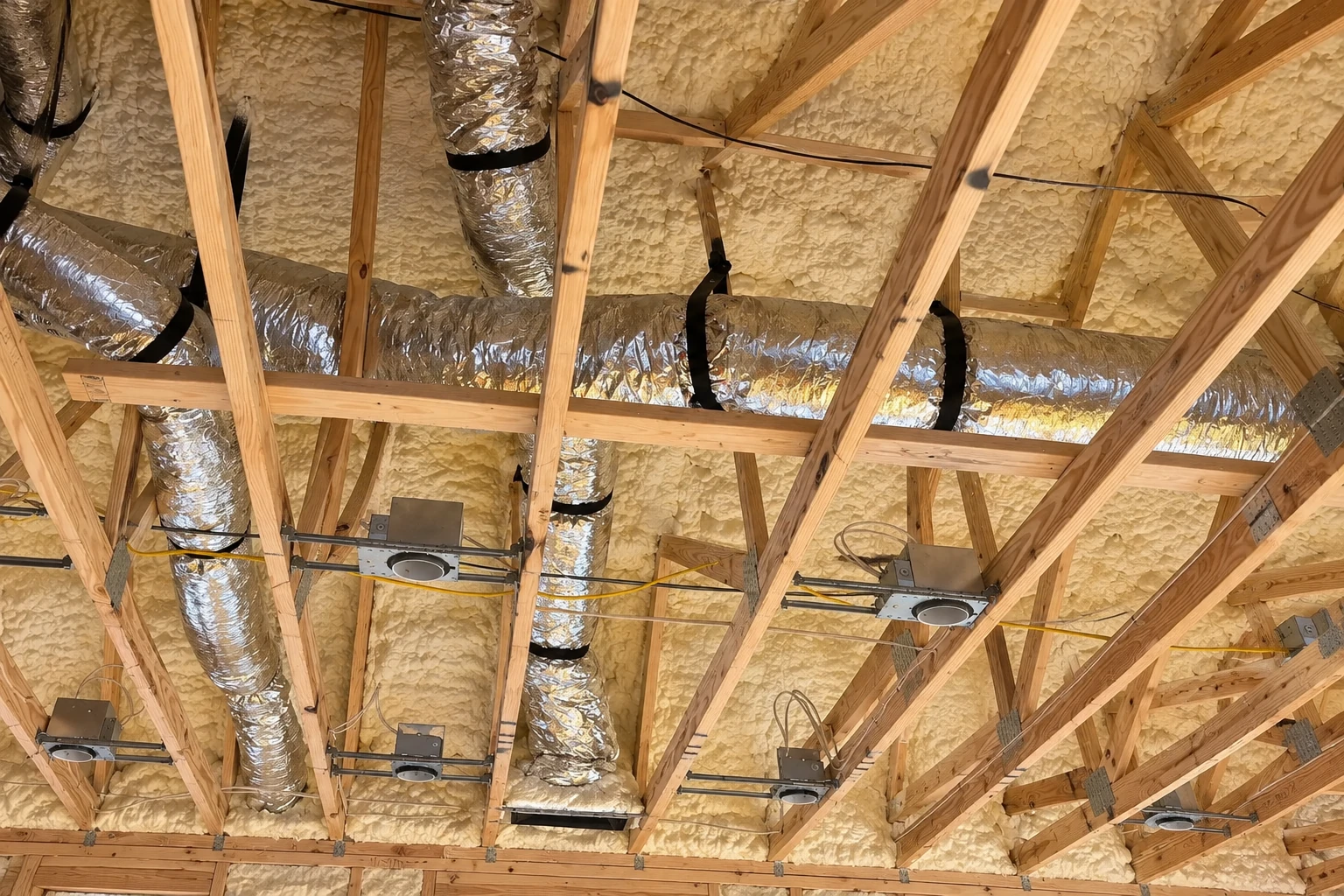
Air sealing services in Conway, AR close the gaps between your rooms and the attic, like ceiling joints, wire and pipe holes and the hatch. We use caulk, one-part spray foam or solid blocking to stop the drafts so the insulation over them can actually work.
Most people call me about a room that won't stay comfortable, cold floors or a power bill that keeps climbing, and the gaps behind it are usually buried under the insulation already in the attic. The price moves with how much old insulation has to be pulled back to reach those gaps, how many openings there are, how hard the attic is to move around in and whether a repair has to come first. The schedule depends on that repair work, any permit and whether new insulation goes in right after. I come out myself and write down what I found and what I'd do, in the order I'd do it, so the estimate is where you'll see what your house needs. We're based in Conway and work in many of the cities around central Arkansas, from Morrilton out to Beebe and down to Bryant.
I look at every house myself before we quote it, and our crew does the work with me or a lead installer on site, so the gaps I found are the ones that get sealed.
If a roof is leaking or a bath fan is blowing into the attic, I'll tell you it has to be fixed first, because sealing and insulating over a problem just hides it.
We're licensed and fully insured. When you compare bids, keep in mind that the state's limited home improvement license only covers residential jobs under $50,000, labor and material together.
Before anything gets sealed, I check the attic for live knob and tube wiring, vermiculite, which is old loose fill that looks like gray-brown pebbles, bath fans blowing into the attic, roof leaks and any flooring in the way, because each of those changes the plan. Then our crew pulls back the old insulation and goes after the gaps underneath it. That means the seams where the wall tops meet the drywall, the wire and pipe holes, open chases and the hatch. Small gaps get caulk or one-part spray foam, and big holes and open soffits get solid blocking. Hot flues get metal blocking and a metal collar, since foam doesn't belong against a hot pipe. Recessed can lights that aren't rated to touch insulation get a cover built over them. When we're done, the insulation goes back evenly, as deep at the edges as in the middle, and the eave vents stay clear so the attic can still breathe.
Air leaks don't stop at the attic. The rim along the top of the foundation walls lets in a lot of air, and we seal it as part of basement insulation. Where a spot needs to be sealed and insulated in one pass, closed-cell foam insulation, a dense foam that also blocks moisture, does both jobs. Foam costs more, though, so I usually recommend sealing the gaps and topping up loose fill unless your ductwork runs through the attic.
Attic air works its way down through gaps around ceiling fixtures and along the tops of interior walls. Sealing those from above usually evens out the upstairs better than adding more insulation does.
That room shares framing with the garage below it, so gaps in its floor and walls let garage air come right in. We seal those seams before anything gets insulated.
Holes where pipes, wires and ducts come up through the floor let crawl space air into your rooms. Closing them from below helps the floor stop feeling drafty underfoot.
Years of fill can hide open chases, an unsealed hatch and dozens of wire holes. The insulation looks deep, but air moves right through it, so we check underneath before calling the attic good.
Send the form or call, and we'll reply within one business day to set a time. I come out, look the house over and write down what I found and what I'd do, free and with no obligation.
If you know of a roof leak, a bath fan that vents into the attic or a gas fireplace, mention it on the form, because each one changes what I check first.
Some houses are tighter than their owners think. If yours doesn't need sealing, or only has a few spots you could handle yourself, I'll tell you so.
That's the one promise we make, and it's why I write the plan down before we start, so you know exactly what you're getting and what you're not.
Sealed attic floors, blocked soffits, flue collars and foam work, the kinds of details we can talk through when I come out to look at your house.
These are the questions Conway homeowners ask most about sealing air leaks, with plain answers to help you plan the job.
Yes, you can seal the obvious leaks yourself, such as around door frames, ducts, fans and the holes where pipes, vents and wires pass through walls. Simple sealing won't catch the small, hard-to-find leaks, especially in an attic under layers of insulation. Pros track those down with tools like a blower door test, which pulls air through the house, or a thermal camera.
Yes, the sealing should come first. The standard guidance for an existing vented attic is to seal every opening in the attic floor before insulation goes in, because once the new fill is on top, those gaps are buried again. If you're planning attic insulation, book both jobs together and we'll seal first, then insulate.
Yes, as long as ventilation is planned along with the sealing. A tighter house without enough fresh air can hold extra moisture and harmful gases. A gas furnace, water heater or fireplace that's short on oxygen runs poorly and may give off carbon monoxide. That's why I note every fuel-burning appliance at the estimate and plan the job around it.
Conway's building permit list names new construction, remodels, additions and accessory buildings but not air sealing, so I check with the city's Building Permits & Inspections office before we start each job. The city does require separate permits for electrical, plumbing, gas and mechanical work, which matters if a fan or flue needs rework. If a permit is needed, we take care of it.
Yes, some households can get air sealing at no cost through the Weatherization Assistance Program. A trained energy auditor inspects an eligible home, and the typical work includes air sealing. Households at or below 200% of federal poverty guidelines, households with a member on SSI and households receiving or eligible for LIHEAP may qualify. You apply through the community action agency or nonprofit serving your county.
Our phone lines are open every day until 10 PM, so call (501) 273-0205 when you notice a draft, or send the form anytime.