Upstairs runs hot all summer
When the bedrooms upstairs never cool down, the cause is usually a thin or patchy attic layer, open gaps letting attic air in, or both. We check for each one.
Hot upstairs, drafty rooms or a power bill that keeps climbing? We check what's up there first, seal the gaps, then add what's missing.
Attic insulation in Conway, AR, means closing the air leaks between your attic and the rooms below, then adding insulation where the old layer comes up short, because most insulation slows heat but doesn't stop air from moving through it.
Most calls start with a power bill that keeps creeping up or a house that feels drafty in winter, and usually the attic layer has thinned out or air is slipping through gaps around it. The price depends on the size of your attic, how easy it is to get around in, how much sealing it needs and whether anything has to come out or be repaired first. That same prep work sets the schedule, along with a permit if your job turns out to need one. Once I've been up there, I'll write down what I found and what I'd do, in order.
I come out to every job before anything is planned, and our crew does the work with me or a lead installer on site, so what I saw is what gets fixed.
If the old insulation is soaked, full of droppings or hiding a leak, I'll tell you the repair comes first, because new insulation on top just buries the problem.
We're licensed and fully insured. In Arkansas a Limited home improvement license covers home jobs under $50,000 in labor and material, so on a bigger project, ask which license your installer holds.
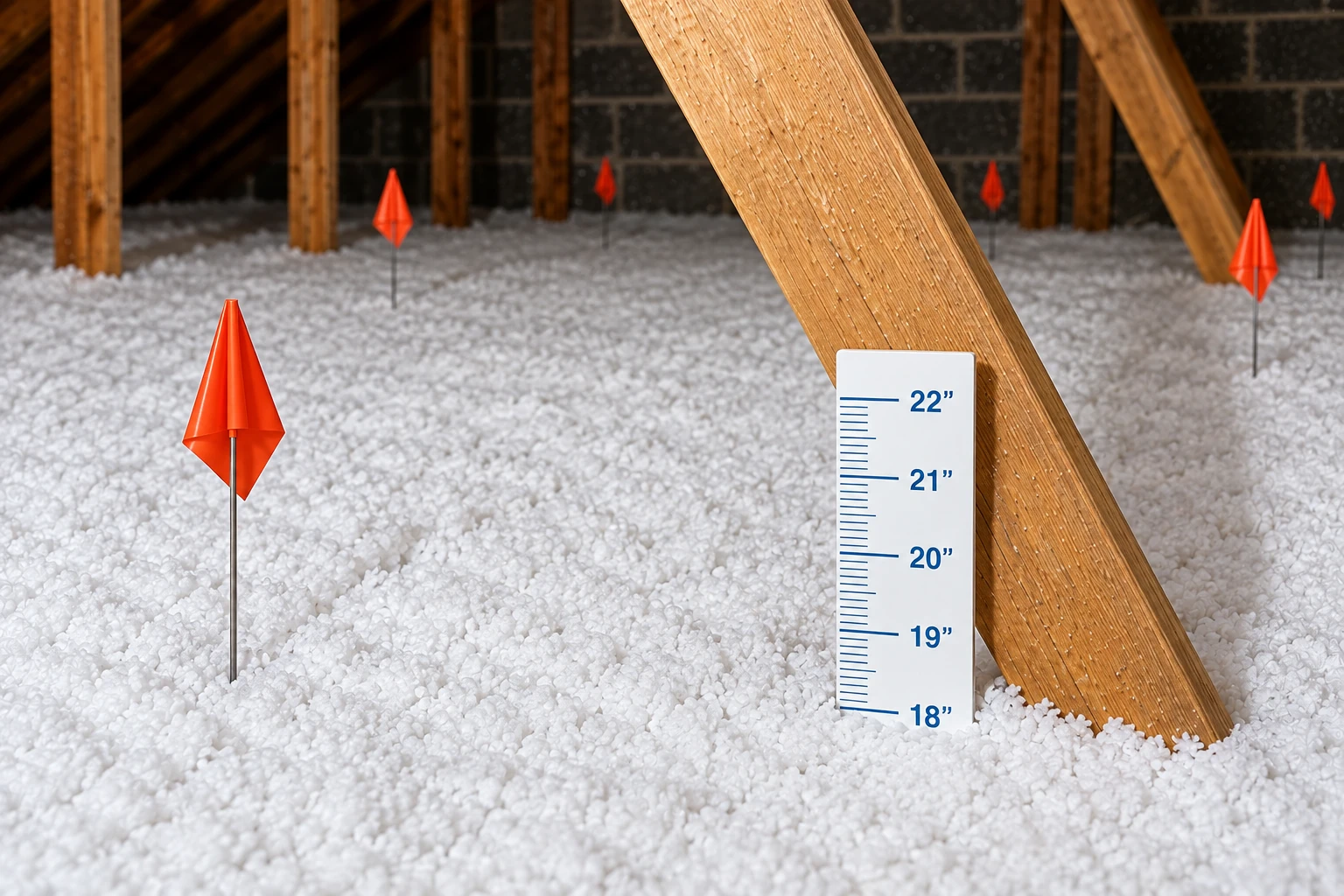
I start by checking how high the old insulation sits against the joists, because that tells me more than anything else up there, and if your attic already has enough, I'll tell you so. If it needs more, our crew does the air sealing first, closing the gaps around can lights, pipes, wiring holes and the attic hatch so the new insulation isn't fighting a draft. We keep insulation back from lights that aren't rated to touch it and hold it off the eave vents, because a buried vent stops the attic from breathing and shows up later as moisture in the framing. Then we lay the insulation in evenly at full depth right out to the edges, since the thin spots near the eaves are usually where the old job came up short. Before any of that, you and I talk through blown fill, which is loose insulation blown in through a hose, against batts for your space. Foam costs more and seals air while it insulates, but for most attics, sealing the gaps and topping up with loose fill is the better buy, unless your ductwork runs through the attic.
Attic work often ties into other jobs. When the plan calls for loose fill, our blown-in insulation page explains how that material goes in. If the attic is one of several trouble spots, like cold floors over a crawl space or drafty walls, our home insulation work looks at the whole house so we fix things in the right order.
When the bedrooms upstairs never cool down, the cause is usually a thin or patchy attic layer, open gaps letting attic air in, or both. We check for each one.
That room often has less insulation and more open edges than the rest of the house, so we look at it on its own instead of assuming it matches.
Uneven temperatures from room to room often trace back to coverage that's deep in the middle of the attic and thin at the edges, which is backward from what you want.
Insulation that's been walked on, pushed aside for wiring or settled over the years doesn't do its job. We sort out what stays before anything gets added.
Send the form and we'll reply within one business day to set a time. I'll come out, look over your attic and write down what I found and what I'd do, free and with no obligation.
If you can get a look, note whether the joists are showing, whether there's any gray pebble-like fill and whether you have recessed lights below, since those three shape what comes first.
You get my findings on paper in the order I'd tackle them, so you can decide what makes sense now, what can wait and what isn't needed at all.
That's our promise on the work, and it starts with an estimate that explains what's up there, so you understand the job well enough to make the call yourself.
These photos show blown fill, batts, foam and sealed openings, so you can point to what you'd like to talk through during the estimate.
Here are the questions we hear most about attic insulation in Conway, from how much is enough to what has to happen first.
If your insulation sits level with or below the floor joists, so you can easily see them, you should add more. If it sits well above the joists and hides them, you probably have enough, and adding more may not be worth the cost. One federal guide suggests about 10 to 14 inches for most attics, depending on the type.
Usually, yes. Blown loose-fill in fiberglass, rock wool or cellulose generally costs less than batts and covers better, because it fills in around joists, wires and odd corners, though installed prices can vary. When you compare quotes, ask each contractor whether blown fill suits your attic, and we'll talk it through with you on site.
Moisture and old wiring come first. Wet insulation from a roof leak, moldy or rotted rafters or joists, and kitchen, bath or dryer vents blowing damp air into the attic should be repaired before new insulation goes in. Knob and tube wiring from before 1930 can be a fire hazard where it touches insulation and may need correcting first.
No, not until it's tested. Vermiculite is a light, flaky gray fill about the size of a pea, and it can contain asbestos. Leave it alone until an approved lab tests it and confirms there's no asbestos in it. If I see it during the estimate, testing goes at the top of the list, ahead of everything else.
Conway says trade permit applications may take 1 to 2 business days, and residential permit review up to 3 to 5. Its list names new construction, remodels and additions rather than attic insulation, and electrical, plumbing, gas or mechanical work carries its own permit. I ask the city's permit office at 501-450-6107 about every job before we start, and if one's needed, we handle it.
Call (501) 273-0205 any day of the week until 10 PM, and we'll come out from Conway to Morrilton, Beebe, Bryant and the cities between.