Upstairs that won't cool down
When the upstairs runs hot all summer while the downstairs feels fine, the attic floor above those rooms is usually letting heat through the ceiling, and that's where blown fill helps.
A hot upstairs and a climbing power bill usually point to a thin attic layer. We fix what's underneath, then blow in an even one.
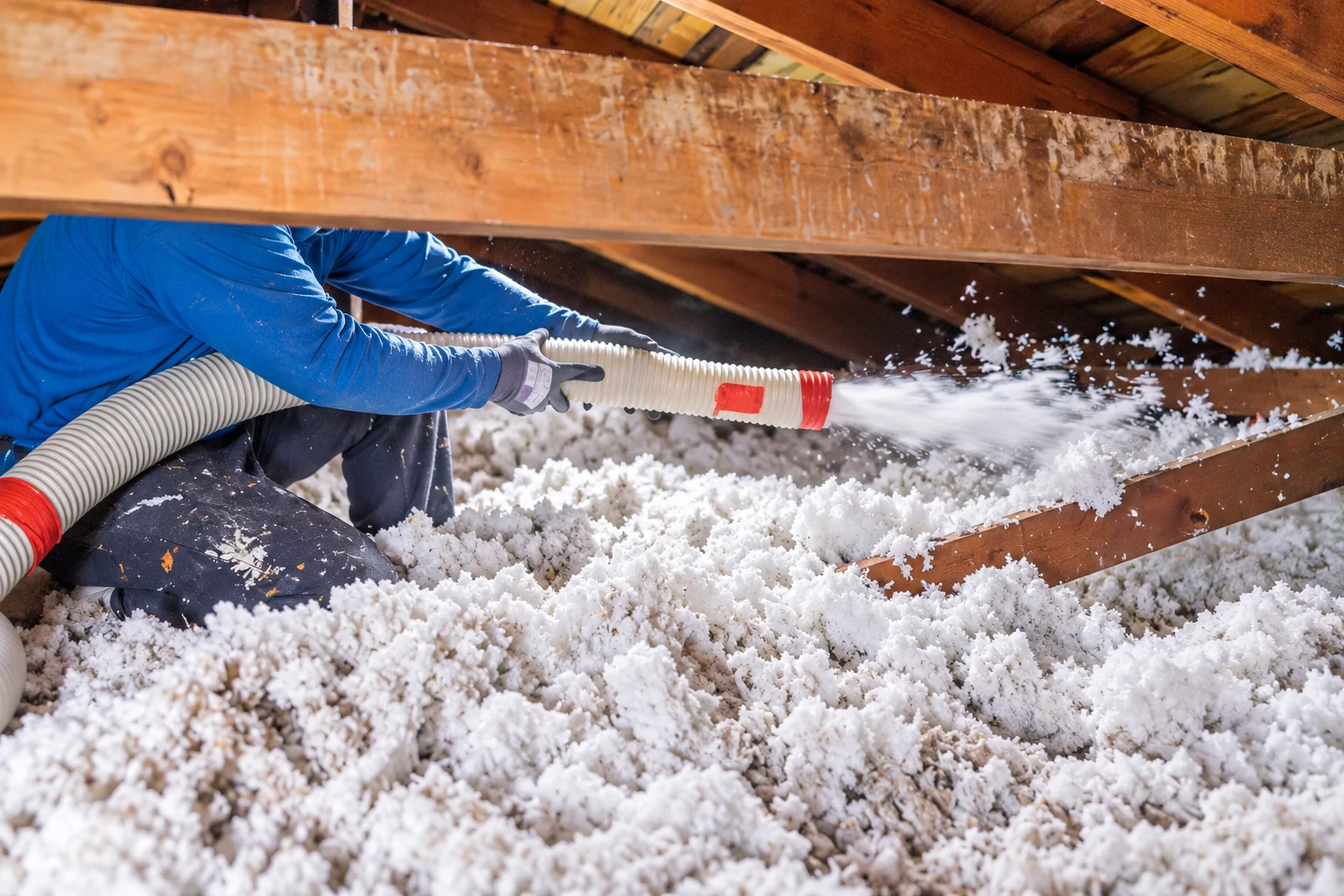
Blown-in insulation is loose fill, usually cellulose or fiberglass, that we blow through a hose across your attic floor, and in Conway it's a common fix for upstairs rooms that won't cool down and ceilings that let the summer heat straight through.
Most calls start with a room that never gets comfortable or a power bill that keeps creeping up, and the attic is usually where I look first. The price turns on how big the attic is, how easy it is to move around up there, and whether anything has to be repaired or pulled out before new fill goes down. The schedule turns on that same list, since a roof leak or a soaked old layer has to be sorted out before our crew can start. When I come out, I write down what I found and what I'd do, in the order I'd do it, and that's where you get your own figure.
I come out to every job before we quote it, and our crew works with me or a lead installer on site, so the person who planned the job stays close to it.
If something's wrong under the old insulation, I'd rather tell you a repair comes first than bury the problem under a fresh layer where it keeps doing damage.
I want you to understand your attic well enough to make the call yourself, and if more insulation isn't what your house needs, I'll tell you so.
I start by walking the attic with the plan from the estimate, so the crew knows what comes first. Our crew then sets baffles at the eaves, short chutes that hold the fill back so the vents along the roof edge keep the attic breathing. We keep fill off any recessed light that isn't IC rated, the kind made to sit in insulation, and close up the gaps around pipes and the hatch so the new layer isn't fighting a draft. Then we blow the fill across the whole floor so the edges end up as full as the middle, because even coverage is what makes blown fill work, and we clean up before we leave.
Blown-in covers the attic, and some houses need more than that. When the old layer is soaked from a roof leak or full of droppings, insulation removal comes first so we start on a clean floor. When the drafts are coming from the walls or the crawl space too, we can look at the whole house with home insulation.
When the upstairs runs hot all summer while the downstairs feels fine, the attic floor above those rooms is usually letting heat through the ceiling, and that's where blown fill helps.
If the AC runs longer every summer and nothing else in the house has changed, a thin or settled attic layer is one of the first places I check before bigger fixes.
Attic insulation flattens and thins out over the years, especially in older houses, and once it settles the rooms below start feeling every swing between a hot afternoon and a cool night.
When one bedroom runs warmer than the rest or you feel air moving near the ceiling, the attic is usually short on insulation or open at the gaps, so we look at both.
Send the form and we'll call to set a time, then I come out myself, go up in the attic and walk you through what I found before you decide anything.
The estimate costs nothing and happens at your house, because I can't tell you much about an attic until I've been up in it and seen what's there.
We get back to calls and form requests within one business day, so you're not left wondering whether anyone's coming out to look at your attic.
You can take the written plan, compare it with other quotes and think it over, with no pressure and no obligation to book us for the work.
These example photos show blown fill, batts, baffles and attic layouts we can talk through when we look at your house together.
Here are plain answers to what Conway homeowners usually ask before having blown-in insulation put down in the attic.
Installing blown-in attic insulation usually runs about $4 to $7.75 per square foot across the US, and that's a national figure for the work, not our price. Where your job lands depends on the attic's size and access and on any repair or removal it needs first. The free estimate is where you get your own figure.
Usually, yes. Blowing loose fill tends to cost less than laying batts and covers the attic more fully, since it settles in around joists, wiring and odd corners instead of leaving seams. Install costs still vary from house to house, so it's worth comparing what each quote actually covers.
Usually, yes. New insulation doesn't have to match what's already up there, and loose fill can go right on top of old batts or blankets, so most of the time we don't tear anything out. If the old layer has a problem, I'll show you before we go any further.
Wet insulation from a leaky roof, moldy rafters and poor ventilation all get fixed first. Old knob and tube wiring, the early kind on porcelain knobs, can be a fire hazard under insulation, so it's checked and repaired first. Flaky gray vermiculite may contain asbestos, so an approved lab tests it before anyone disturbs it.
Conway's Building Permits & Inspections office processes permits in the city and inspects work against city and state building safety standards. Its permit list names new construction, remodels, additions and accessory buildings rather than insulation, so I check with the office about each job before we start. If the work needs a permit, we take care of it.
Home improvement contractor licenses in Arkansas are regulated by the Arkansas Residential Contractors Committee, a state agency. A Limited license covers residential projects under $50,000, labor and material included, while an Unlimited license covers jobs of any size. We're licensed and fully insured. Satisfaction guaranteed.
Call (501) 273-0205 or send the form, and mention any recessed lights, damp spots or older material so I know what to look for.