The room over the garage
That room runs hot in summer and cold in winter because air moves through the framing around it. Foam fills those cavities and seals the leaks in one pass, so the room keeps up.
Hot upstairs rooms, drafty walls or a power bill that keeps climbing? We match the foam to how each part of your house dries.
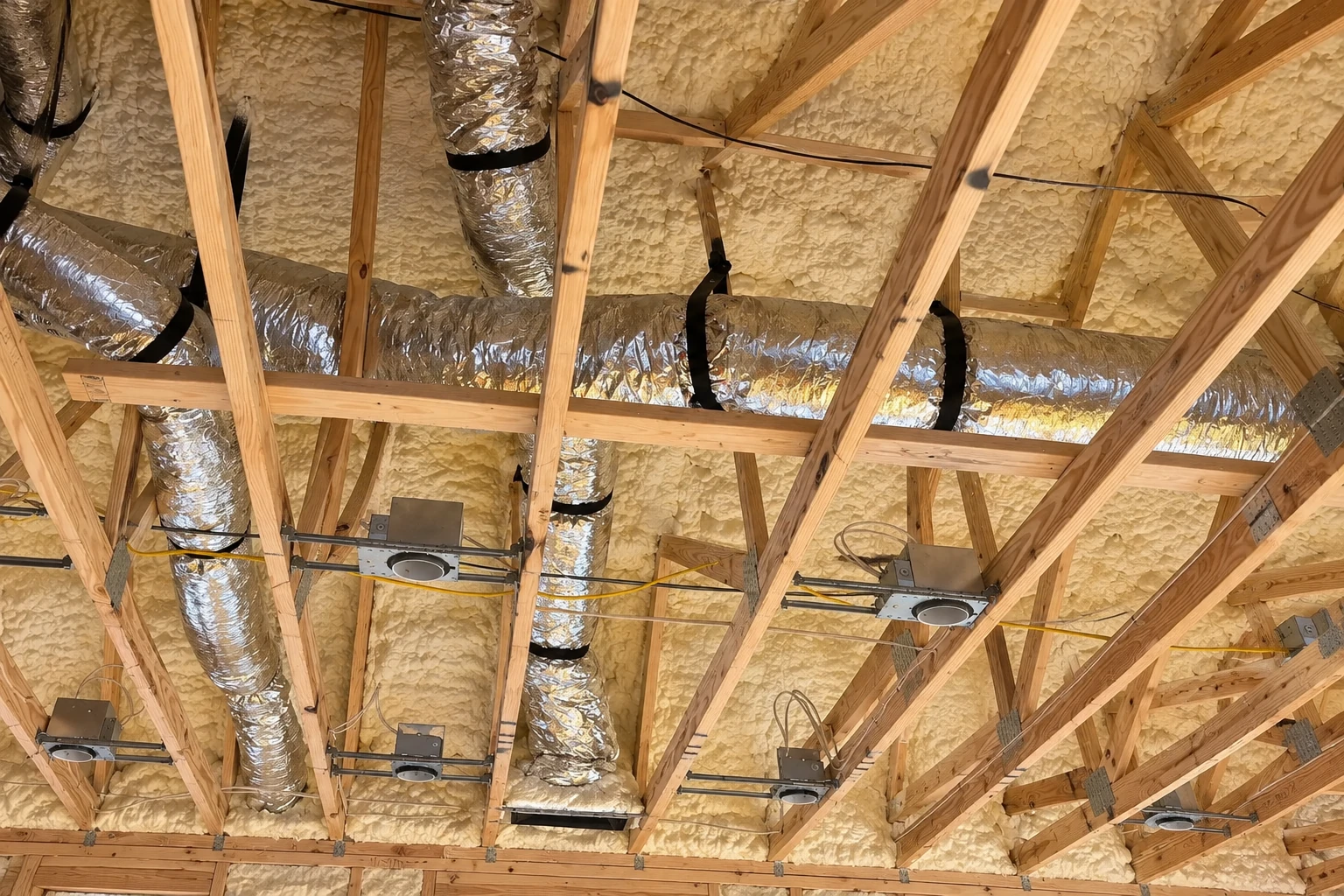
Spray foam insulation in Conway is foam sprayed into frame walls and other open framing, where it insulates and seals air leaks in the same coat, so the insulation can do its full job. At Beacon Conway Spray Foam Insulation, I choose the foam for each part of your house by how that part needs to dry.
Most calls start with a drafty room, an upstairs that runs hot or a power bill that keeps climbing, and foam is one way to fix that, not the only one. The price moves with how many square feet we cover, which foam each area gets, how thick it goes and whether old insulation or a repair has to be handled first. The schedule turns on that repair work, a permit if the job needs one, and where you'll stay while the foam cures. At the estimate I write down what I found and what I'd do, in the order I'd do it.
If there's a wet spot, a leak or droppings in the old insulation, I'll tell you it has to be dealt with first, because foam over a problem just hides it.
I explain what I found and why each step comes in the order it does, so you can decide for yourself, even when the honest answer is that you don't need foam.
I learned this trade running jobs alongside another insulation contractor before starting this business in 2023. We're licensed and fully insured, and our work is satisfaction guaranteed.
I start by looking at what's already in your walls and ceilings, and anything wrong under there gets fixed first, along with the gaps around pipes, wiring and the hatch, so the new insulation isn't fighting a draft. Then I go over each wall and roof area with you and talk through how it needs to dry, because that decides which foam it gets, the lighter open-cell kind or closed-cell, the dense kind. Before we set a start date, we plan where you'll stay while the foam cures, so nobody's packing a bag the morning of. On the day, our crew covers everything that shouldn't get foam, sprays, trims back the extra and cleans up, and you come home once it's time to come back.
Foam costs more than loose fill, and it seals air while it insulates. For a lot of houses, sealing the gaps and topping up the loose fill with blown-in insulation is the better buy, unless your ductwork runs through the attic, and I'll show you which way your house leans. When the heat is coming from overhead, attic insulation is usually where we start.
That room runs hot in summer and cold in winter because air moves through the framing around it. Foam fills those cavities and seals the leaks in one pass, so the room keeps up.
When a remodel or addition has the studs bare, foam can go straight into the frame walls before drywall, which is the easiest time to get full coverage and a tight seal.
If you feel air moving at outlets, trim or baseboards, the insulation behind them is losing to a draft. Foam seals and insulates together, which is where it beats loose fill.
Uneven temperatures from room to room usually come from air leaks more than thin insulation. I find where the air is getting through before deciding whether foam is the right fix.
Send the form and we'll reply within one business day to set a time. I come out, look at your house and write down what I found and what I'd do, free and with no obligation.
I look at every job in person, and our crew does the work with me or a lead installer on site, so the person who planned it is close at hand.
You get what I found and what I'd do, repairs first, so you can see why each step matters and decide for yourself what to go ahead with.
We're based in Conway and work in many of the cities around central Arkansas, from Morrilton out to Beebe and down to Bryant.
These photos show foam, loose fill and finished layouts you can point to when we talk through what fits your house.
Straight answers on cost, foam type, time away from home, permits and licensing for a spray foam job around Conway.
Spray foam in the Little Rock area usually costs about $1 to $5 per square foot. Where your job lands depends on which foam each area gets, how thick it goes and whether old insulation or a repair has to be handled first. The estimate is free, and I'll walk you through what moves the cost on your house.
Pick by how that wall needs to dry. Closed-cell slows moisture at typical thicknesses, so a frame wall full of it dries poorly to the outside, while open-cell lets vapor pass. An older federal guide rates open-cell acceptable for frame walls in hot, humid climates, and warns that an inside vapor retarder there can lead to condensation and mold.
Federal guidance says to stay out during spraying, cleanup and a stretch afterward while the foam cures. Some foam makers recommend 24 hours before anyone moves back in, but it varies by product, so I'll tell you what the maker of your foam says about re-entry time, the point when you, your kids and pets can come back.
The City of Conway lists permits for new construction, remodels and additions, not insulation alone, so I check with the city before each job and take care of a permit if one's needed. Any electrical, plumbing, gas or mechanical work needs its own trade permit, those applications may take 1 to 2 business days, and residential review may take up to 3 to 5.
It can, because sealing a house tighter can limit the fresh air coming in. Spaces with fuel-burning appliances may need added air exchange so combustion gases can't build up, and federal guidance says to plan that with an HVAC design professional. I ask about gas appliances at the estimate so that's part of the plan from the start.
The state issues a Limited home improvement license for residential projects under $50,000, counting labor and material, and an Unlimited license for residential projects of any size. The total of your job tells you which one fits. We're licensed and fully insured, so ask about it when I come out.
Tell us the areas to insulate, rough square footage and any gas appliances when you call (501) 273-0205, so I know what to check.