
Cold floors in the rooms above
When the floor over the basement stays cold all winter, the heat is usually slipping out through bare foundation walls. Insulating those walls keeps more of it in the house.
Cold floors upstairs, a musty basement or a power bill that climbs all winter? We fix any water first, then insulate the walls.
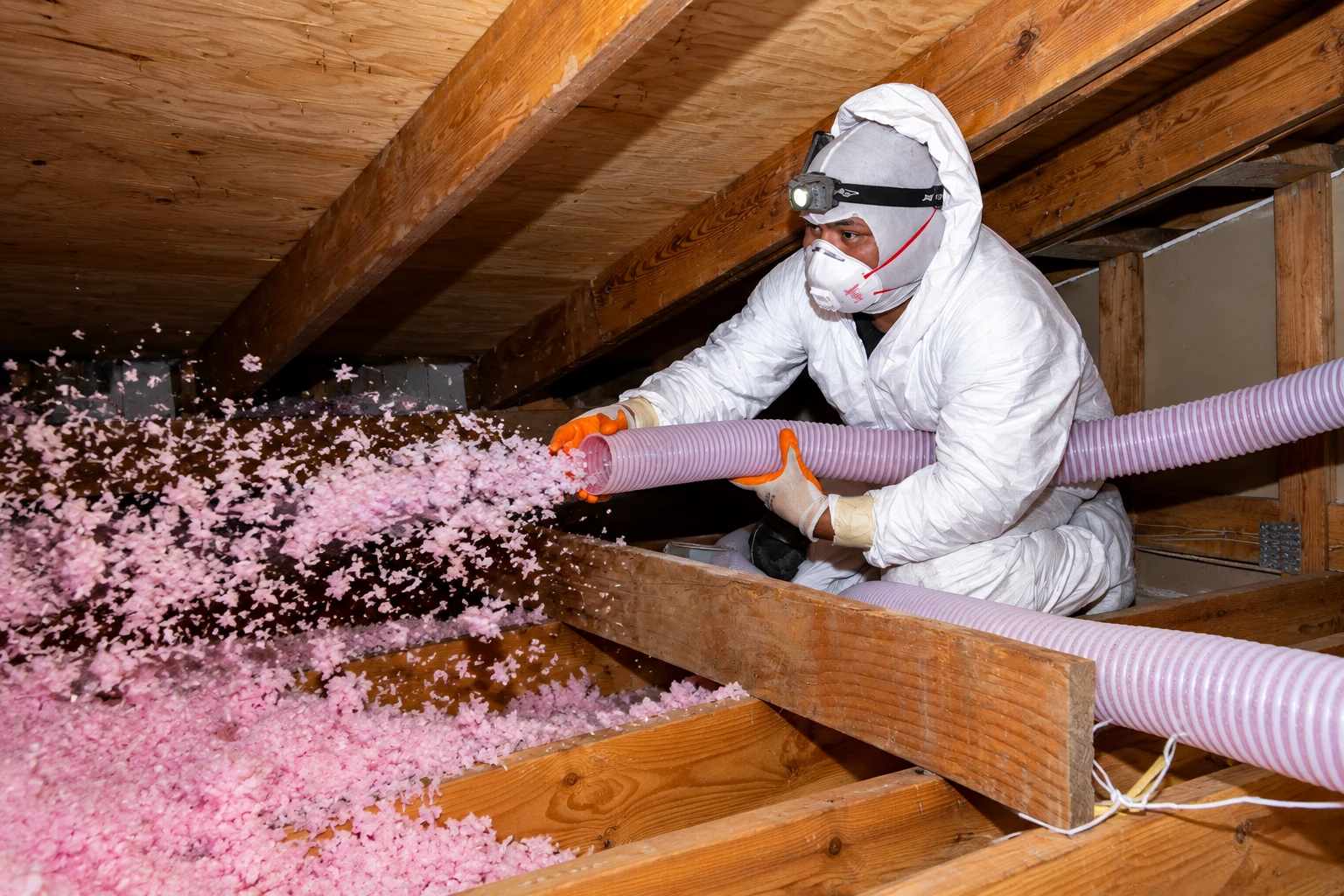
Basement insulation in Conway puts a layer on your foundation walls, on the inside or the outside, so less of your heat escapes through the basement and the rooms above it stay warmer.
Most people call us about a floor that's cold underfoot, a basement nobody wants to spend time in, or old insulation that's sagging off the wall. At Beacon Conway Spray Foam Insulation, I look at the walls myself before we talk about any material, because a damp wall changes the whole job. The price moves with how much wall there is, whether water has to be dealt with first, which foam fits, and the covering the foam needs once it's up. The schedule mostly turns on that water repair and on whether the job needs a permit, and the estimate gives you what I found and what I'd do, in the order I'd do it. We're based in Conway and work in many of the cities around central Arkansas, from Morrilton out to Beebe and down to Bryant.
I come out to every house myself and look at what's on the walls now and what's behind it, so you hear about a needed repair before anyone talks about new insulation.
I'll explain what I found and why the steps go in that order, so you can make the call yourself, even when my answer is that you don't need the work.
Arkansas counts anyone who bids on, contracts for or manages work on an existing single family home as a home improvement contractor, so ask who you're hiring. We're licensed and fully insured.
I start by walking the basement with you and checking every wall for water stains, white crust on the concrete, a musty smell and whatever insulation is on there now. If a wall is wet, we deal with that first, because insulation over a damp wall hides the problem instead of fixing it. Once the walls are dry, our crew sprays foam tight against the concrete so no air is left behind it, then covers it the way foam has to be covered, with either ignition-barrier paint, a fire-protective coating, or drywall. We clean up before we leave, and you see the finished wall before we call it done.
The material is usually spray foam, either closed-cell foam insulation or open-cell foam insulation, and which one fits depends on how much moisture that wall sees. If you plan to finish the room later, the drywall you'd hang anyway can be the foam's covering, so we plan the two together.
When the floor over the basement stays cold all winter, the heat is usually slipping out through bare foundation walls. Insulating those walls keeps more of it in the house.
If you're turning the basement into an office or a bedroom, the walls get insulated before the framing goes up, so the new room isn't the coldest one in the house.
If old batts are sagging, damp or pressed flat against the concrete, I look at what's behind them before we decide whether they come out, because new material shouldn't go over a problem.
The band where the wood framing sits on the foundation often leaks air. Foam seals those gaps while it insulates, so the basement stops pulling cold air into the house.
Send the form and we'll reply within one business day to set a time. I come out, check your basement walls and write down what I found and what I'd do, in order, with no obligation.
Estimates are free and done on site, because I can't tell you what a basement wall needs without seeing it, touching it and checking it for water.
If water ever comes through your basement walls, after a heavy rain or all the time, mention it in the form. It tells me what to look at first.
You keep my written notes whether you hire us or not, and nobody pushes you to sign that day. Our work is satisfaction guaranteed.
Examples of spray foam on concrete, painted foam and drywall-covered walls, so you can picture the finish you want before we talk.
Here's what people in Conway ask most when they're deciding how to insulate their basement walls, answered the way I'd answer on site.
Yes. Federal energy guidance says to check the wall for water coming in and fix that before insulating, and to steer rain and runoff away from the foundation walls. If I find water, the repair goes first on my written notes, and the insulation waits until the wall is dry.
Closed-cell spray foam suits most basement walls, since federal research found it gives the best moisture control of any insulation on the inside of the wall, and it stops air leaks too. Open-cell foam also blocks air but has to go on thicker to protect against moisture, so it takes more material. Rigid foam boards work only when they sit fully against the wall with every seam sealed.
You can, but fiberglass batts and cellulose shouldn't touch the foundation wall, according to federal research, so ask any installer how they'll keep them off the concrete. Federal guidance also says not to put plastic sheeting or foil-faced board on the room side of fiberglass in a basement, because it can trap moisture inside the wall.
I check that with the city before every job, because the city of Conway's permit list names new construction, remodels, additions and accessory buildings, not insulation on its own. If yours needs a permit, we take care of it, and residential review can take up to 3 to 5 business days. Adding electrical, plumbing, gas or mechanical work brings its own permit, which usually takes 1 to 2 business days.
It can make them harder to spot. A spray foam trade group notes that foam on below-grade walls may cover the joint where the foundation meets the wood framing, which termite inspectors need to see, so ask how that joint stays in view. Insulating the outside of the walls isn't recommended where termites are a problem.
Usually, if your basement walls are bare, because federal research puts 10% to 30% of a home's total heat loss through the basement. What you save depends on the climate, your fuel cost, your heating system and how you use the house, and your price depends on your walls, so the estimate is where you'll get a real figure.
Call (501) 273-0205 or send the form, and if you've seen water after a storm, a photo of that wall helps me plan the visit.