A musty smell inside
When the house smells damp and stale, air from under the floor is often part of it, and covering bare dirt is usually the simplest place to start.
Musty smell, damp dirt or torn old plastic under the house? We sort out any water coming in, then cover the whole crawl space floor.
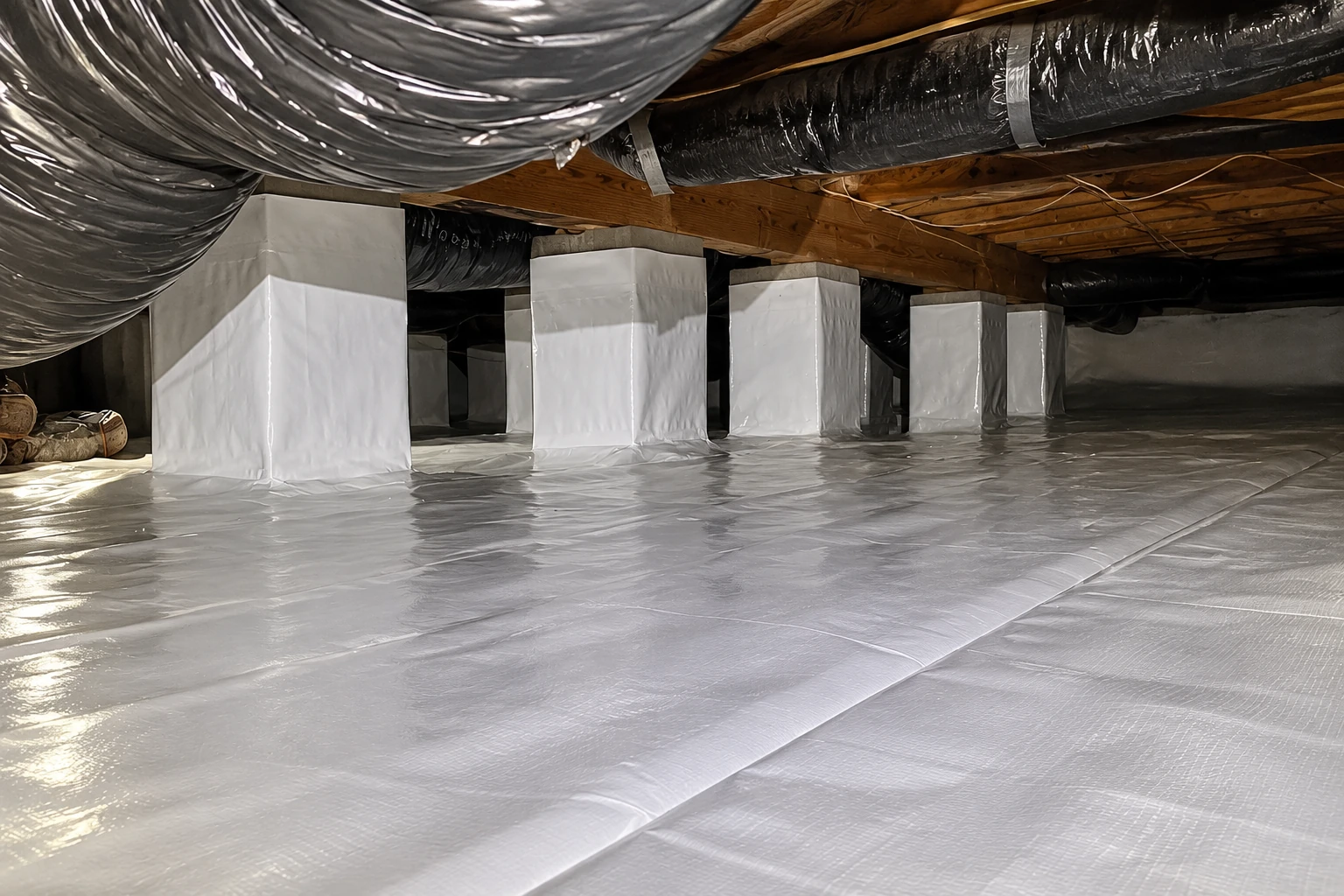
Vapor barrier installation in Conway means laying a heavy plastic ground cover over the bare dirt in your crawl space, so less ground moisture and fewer soil gases, such as radon, rise into the space under your floors.
Most people call us because the house smells musty, the floors run cold or the old plastic under the house is torn and bunched up. The price mostly comes down to how big the crawl space is, how much old plastic and stored stuff has to come out, which grade of liner fits, and whether drainage work or a full seal is part of the job. The schedule turns on whether a water problem has to be fixed before anything goes down. I check with the city about permits before we start and take care of any the job needs, and your estimate lays out what I found and what I'd do, in the order I'd do it.
I come out to every job myself before anything is priced, and our crew does the work with me or a lead installer on site, so the plan doesn't get lost between visits.
If something under the old cover needs fixing, I'll tell you it has to come first, because laying fresh plastic over a problem only hides it until it shows up again.
I ran another contractor's jobs for years and did the work on my back under houses before starting this business in Conway in 2023, so I know what a failing cover looks like.
I start outside, walking the grading and drainage along the foundation, because a ground cover won't stop water that runs in from the yard and that has to be handled first. Anything stored down there needs to come out so the plastic can cover the whole floor, and then we clear the debris, lay the sheeting and run it up the walls and piers, fastened in place, or stake it down around the edges where that fits the space better. Where someone has to crawl to reach a furnace, ductwork or a water heater, we use a tougher, reinforced liner, because thin plastic tears under knees and tools and leaves the dirt open again.
A ground cover is often one piece of a bigger fix. If the rooms over the crawl space still run cold, retrofit insulation adds insulation to the house you already have without tearing into it, and up top, attic air sealing closes the gaps around lights, pipes and the hatch so the air you pay to heat and cool stays in the house. I'll tell you if either one is worth doing, and I'll tell you if it isn't.
When the house smells damp and stale, air from under the floor is often part of it, and covering bare dirt is usually the simplest place to start.
Thin plastic that's ripped, shoved into corners or missing whole sections leaves dirt open to the air, so we pull out what's useless and cover the floor from wall to wall.
If you're planning crawl space insulation, the ground cover goes down first, because insulation over open, damp dirt starts out fighting moisture from the day it goes in.
Sealing a crawl space shut, often called encapsulation, is a bigger job, and the ground cover is its base, with the vents closed off and a dehumidifier usually added.
Send the form and we'll reply within one business day to set a time. I come out myself and write down what I found and what I'd do, free and with no obligation.
It helps to know the crawl space's rough size, whether you've seen standing water down there, and which appliances burn gas or propane, because each one changes the plan.
If your crawl space just needs a cover, I'll say so, and if it doesn't need anything yet, I'll say that too, so you're not talked into work you don't need.
We answer Monday through Friday from 6 AM to 10 PM and on weekends from 8 AM to 10 PM, so you can call after work or on a Saturday.
These photos show the kinds of liners, wall finishes and insulation we can talk through at your estimate, shown as examples rather than our own jobs.
Straight answers to what Conway homeowners ask about crawl space ground covers, water, permits, cost and keeping gas appliances safe.
Yes, building science guidance says the plastic ground cover should go down whether your crawl space is vented or sealed. So either way, you can plan on the cover as a basic step. What changes between the two is the work that goes with it, and I'll walk you through that when I see yours.
In a vented crawl space, most moisture is liquid water getting in from outside, through poor grading, missing drainage around the foundation or irrigation soaking the ground by the house. A ground cover does nothing about any of those, which is why the outside of the house is the first thing I look at.
Crawl space encapsulation with a vapor barrier and a dehumidifier usually costs about $4,300 to $8,000 per job in Arkansas. That's the going range for the full sealed job, not our price, and a plain ground cover is less work than that. I'll write up what your crawl space needs at the estimate, and our work is satisfaction guaranteed.
Conway's list of required building permits names new construction, remodels, additions and accessory buildings, not vapor barriers, so the answer for your job comes from the city's Building Permits & Inspections office. Any electrical, plumbing, gas or mechanical work in the project needs its own permit. I check with the city before we start, and if the work needs a permit, we take care of it.
Arkansas law provides for licensing and regulating home improvement contractors, so it's fair to ask anyone you're thinking of hiring about their license. We're licensed and fully insured, and I'm happy to go over that at your estimate before you decide anything.
It can be, once the fuel-burning appliances are checked first. Sealing can, in some cases, cause appliances that burn fuel and vent on their own to backdraft, pulling their exhaust gases back into the house. So when a job includes sealing, I look at those appliances before anything gets closed up, and their safety comes ahead of the seal.
Call (501) 273-0205 or use the form, because old plastic that isn't working usually means something underneath needs fixing before a new layer goes down.