Bedrooms, offices and media rooms
Foam that fills the whole cavity cuts down on noise moving between rooms, which helps around a bedroom, a home office or the room where the TV runs late.
Drafty rooms, a hot upstairs or noise coming through the walls? Open-cell foam stops the moving air and quiets the room you live in.
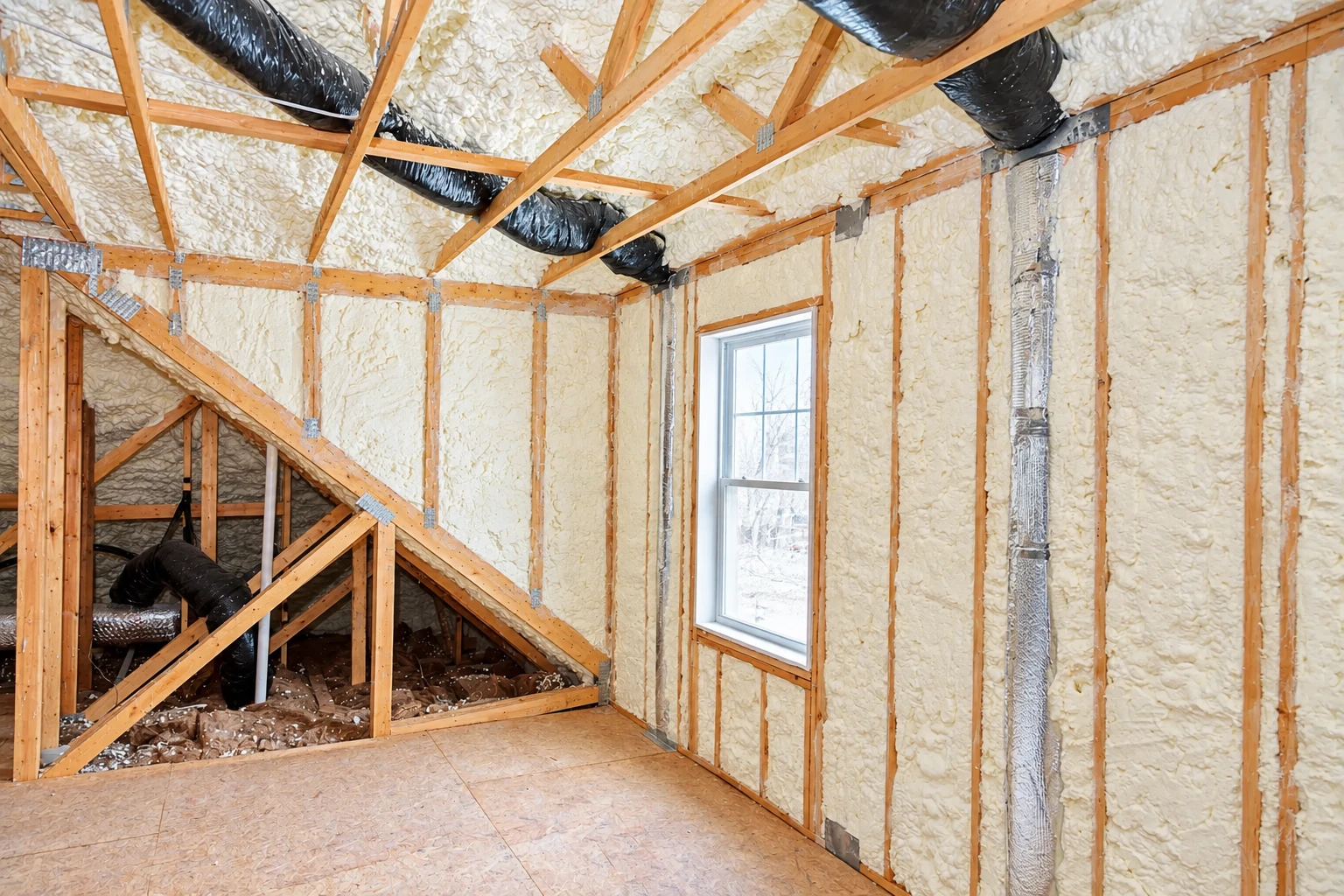
Open-cell foam insulation in Conway is a soft spray foam we apply to attics and walls, where it swells into the gaps, slows heat and stops air from moving through, so rooms feel less drafty and quieter.
Most calls start with a drafty room, an upstairs that won't cool down or a power bill that keeps creeping up. The price comes down to how much area we spray and how thick, whether old insulation has to come out first, whether walls and ceilings are already finished so the foam has to be injected, and how easy the attic is to reach. The schedule turns on any removal or repair that has to happen first and on lining up time away from home for spray day, and I'll sort both out for your house at the estimate.
I check what's already in your attic or walls first, because foam sprayed over wet or dirty insulation just hides the problem. If a repair has to come first, I'll say so.
Open cell is easier on the budget and quiets a room better, but it gives you less per inch than closed-cell, so I'll tell you plainly which parts of the house it suits.
If old insulation is soaked or full of droppings, we pull it out first so the problem doesn't stay under the new foam. Then our crew closes off the attic or room we're working in, covers floors and anything nearby, and sprays the foam so it swells into the gaps around pipes, wires and the hatch. We trim what puffs out past the studs so the drywall sits flat and clean up before we go, with me or a lead installer on site.
Open cell stops air but still lets water vapor pass, so every job needs a plan for moisture, and under a raised floor that often starts with a crawl space vapor barrier over the bare ground. Building owners weighing foam for offices, shops or rentals can look at our commercial insulation work, where the same look-first approach applies.
Foam that fills the whole cavity cuts down on noise moving between rooms, which helps around a bedroom, a home office or the room where the TV runs late.
When the studs are open, foam expands around wires, boxes and pipes and stops air moving through, which is usually what makes a room feel drafty.
The room over the garage often has gaps where it meets the attic and thin coverage at the edges, so foam on its walls and ceiling helps it keep pace.
If your ductwork isn't up in the attic, sealing the gaps and topping up blown-in insulation, loose fill blown in through a hose, usually does the job for less, and I'll tell you so.
Send the form or call (501) 273-0205, and we'll reply within one business day to set a time. I come out myself for the free on-site look, and there's no obligation.
I write down what I found and what I'd do, in the order I'd do it, so you can see whether a repair needs to come first.
It helps to tell us which rooms bother you, how old the house is and roughly how many inches of insulation are up there now, so I know what to look for.
If I think foam isn't what your house needs, I'll tell you, and you're free to take my written notes and decide on your own time. Satisfaction guaranteed.
Example photos of sprayed foam in walls and attics, loose fill and sealed gaps, to help you picture what we'd talk about.
Straight answers to what people ask most about open-cell foam, from cost and permits to how long you'll be out of the house.
Open-cell usually fits when budget and quiet matter most, and closed-cell when you need the most insulation per inch. Closed-cell slows heat about twice as well per inch, while open-cell costs less and blocks sound much better. At the estimate I'll point to the spots in your house where I'd use each one.
Around Little Rock, open-cell spray foam usually costs about $1,800 to $2,700 to spray 1,000 square feet 3 inches thick. That's what the work typically runs in the area, not our price, and your house can come in higher if old insulation comes out first, the walls are finished or the attic is hard to reach.
Yes, plan to be out. Federal consumer safety staff advise leaving during spraying and for at least 24 hours after. Emissions vary with the foam and the house, so book somewhere to stay with the kids and pets, and we'll confirm your re-entry time, the point when it's okay to come back, before spray day.
Read the product details before you decide. Federal consumer safety staff say people with asthma, respiratory allergies, skin conditions or an earlier sensitivity to isocyanates, a chemical used in spray foam, should review the product information carefully. If that's anyone in your house, we read those details together first, and if open cell doesn't sit right, another insulation can do the job.
The city's permit list doesn't settle it, since it names new construction, remodels, additions and accessory buildings, not foam insulation. I check with Conway's Building Permits & Inspections office about each job before we start, and if it needs a permit, we take care of it. On a permitted job, the office sets up an inspection to check the work against city and state standards.
For residential home improvement work, Arkansas has a Limited license that covers jobs under $50,000, labor and material counted together, and an Unlimited license that covers jobs of any size. It's fair to ask any contractor which one they hold before work starts. We're licensed and fully insured.
Call (501) 273-0205 or use the form early, since spray foam means at least a day away from home and you'll want time to plan it.